Non Surgical Knee Pain Treatment in Atlanta: Options Before Surgery
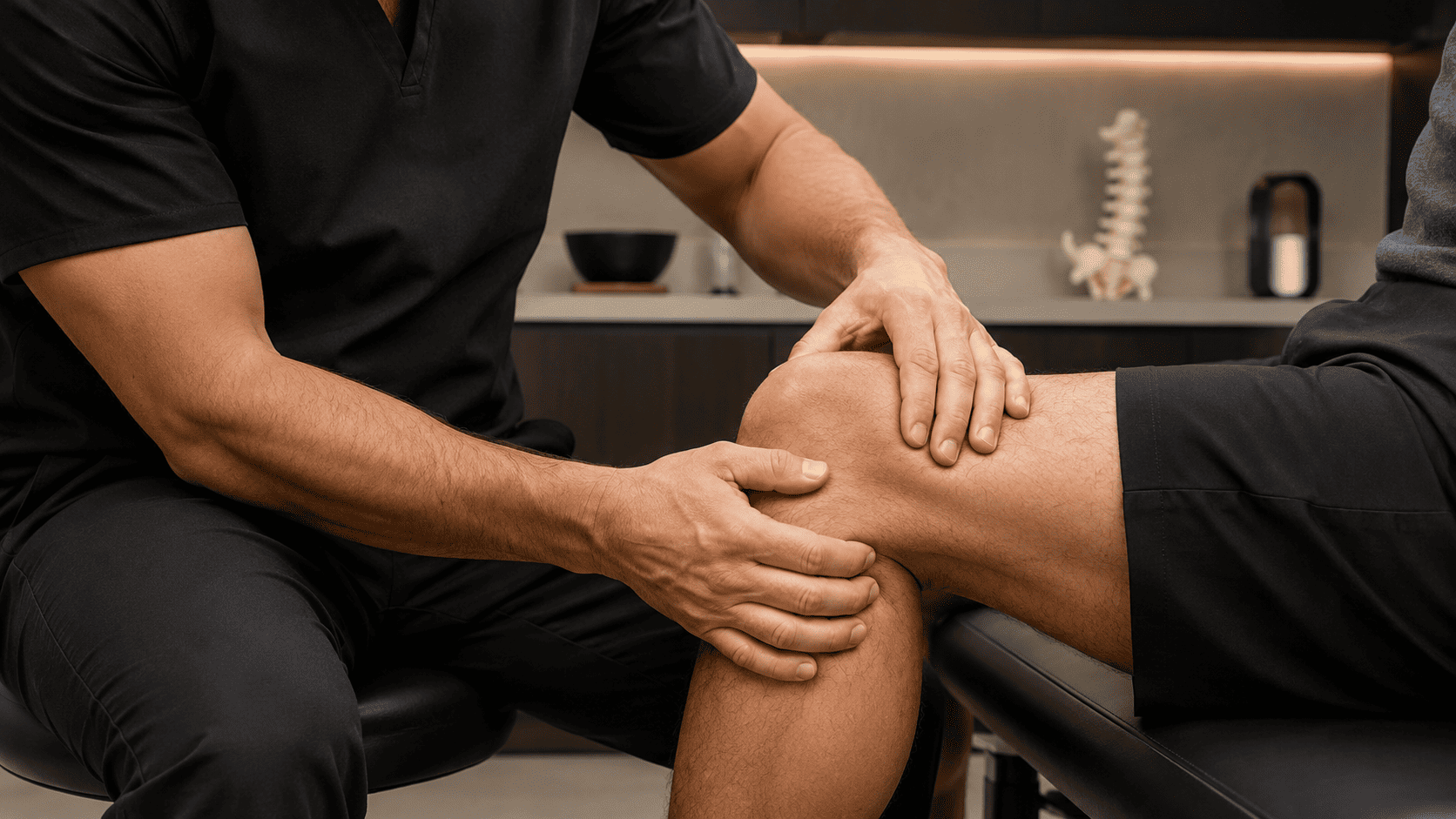
Knee pain is a symptom, not a diagnosis. Osteoarthritis, meniscal pathology, tendinopathy, ligament injury, referred pain, and overload can produce similar symptoms while requiring very different treatment plans.
At Paragon Sports Medicine, the first step is determining why the knee hurts. That requires a detailed history and physical examination, an assessment of how you move, and imaging when it will change the diagnosis or treatment. Surgery is appropriate for some knees. Many others can be managed without an operation when the treatment is matched to the problem.
Common Causes of Knee Pain
Patients searching for a knee doctor in Atlanta often arrive with an imaging report but no clear explanation for their symptoms. Imaging matters, but it does not replace the examination. Meniscal tears and cartilage changes are common on MRI, including in people who have little or no pain.
Common causes of knee pain include:
- Osteoarthritis, which can cause activity related pain, stiffness, swelling, and loss of motion
- Patellar or quadriceps tendinopathy and other overload related tendon disorders
- Meniscal injury or degeneration, sometimes associated with swelling, catching, or mechanical symptoms
- Ligament sprains or tears following a twist, fall, or sports injury
- Patellofemoral pain related to training load, strength, mobility, or movement mechanics
- Pain referred from the hip, lumbar spine, or surrounding soft tissues
Two patients with the same MRI finding may need different treatment. We consider the location and behavior of the pain, joint stability, strength, mobility, biomechanics, training volume, prior treatment, and the patient's goals. The diagnosis, not the procedure, drives the plan.
Non Surgical Options That Can Help
Most non surgical knee pain treatment begins with the fundamentals: activity and load modification, progressive strengthening, restoration of mobility where it is limited, and a structured return to activity. Physical therapy is not simply a preliminary step before an injection. For many patients, it is the primary treatment.
Depending on the diagnosis, additional options may include bracing, medication, changes in training, weight management when relevant, or an image guided injection. Corticosteroid, hyaluronic acid, and platelet rich plasma have different indications, limitations, and evidence. They are not interchangeable, and none should be recommended before the source of the pain is reasonably clear.
PRP uses a sample of the patient's blood that is processed to concentrate platelets and associated growth factors. The preparation is then placed at a specific target. You can read more about our general approach to PRP therapy.
For patients considering a PRP knee injection in Atlanta, the important questions are whether PRP is appropriate for the diagnosis, how the product is prepared, where it will be placed, and what rehabilitation will follow.
The evidence for PRP is most supportive in selected patients with symptomatic knee osteoarthritis, particularly earlier stages of disease, and in certain tendon disorders. Studies do not show that PRP reliably regrows cartilage or reverses arthritis. The realistic goals are reduction in pain and improvement in function. Outcomes vary, and advanced arthritis or significant mechanical pathology generally makes the response less predictable.
Why Ultrasound Guidance Matters
Accuracy matters. We perform biologic injections under ultrasound guidance because it allows us to see the target tissue and the needle in real time. For an intra-articular injection, ultrasound confirms that the needle reaches the joint. For a tendon or other soft tissue procedure, it allows us to treat the intended structure while avoiding nearby nerves, vessels, and uninvolved tissue.
Ultrasound is also useful during the diagnostic evaluation. It can identify an effusion, synovitis, tendon abnormality, cyst, or other finding that may clarify the diagnosis or change the treatment plan. It does not replace an MRI in every situation, but it provides immediate information while we examine the knee.
If you are comparing injection options, ask whether the procedure will be image guided and whether the person performing it has specific training and experience in musculoskeletal ultrasound.
Who Is a Good Candidate
Not every patient with knee pain is a good candidate for PRP. PRP is a treatment tool, and it works better for some conditions than others.
A patient may be a reasonable candidate when the diagnosis is supported by the examination and imaging, appropriate conservative care has not provided enough improvement, and the expected benefit is consistent with the patient's goals. We commonly consider PRP for selected patients with mild to moderate knee osteoarthritis and for certain chronic tendon disorders.
Patients with advanced joint space loss, true mechanical locking, substantial instability, fracture, infection, an acute injury requiring repair, or symptoms arising from another part of the body may need a different approach. Age and activity level matter, but they do not determine candidacy by themselves.
Part of responsible care is identifying when an injection is unlikely to help. In that situation, we will recommend rehabilitation, another treatment, or a surgical consultation rather than perform a procedure that does not fit the diagnosis.
Rehabilitation Is Part of the Treatment
An injection does not correct weakness, poor load tolerance, restricted mobility, or an abrupt change in training. Those factors still need to be addressed.
When PRP is used, rehabilitation is coordinated around the procedure. The early phase protects the treated area while maintaining appropriate movement. Loading is then progressed based on the diagnosis, symptoms, and functional goals. The objective is not simply to feel better for a short period; it is to improve the knee's capacity to tolerate the activities the patient wants to perform.
What to Expect at Your Visit
The first visit is an evaluation. We review how the problem started, what activities provoke it, prior treatment, medical history, imaging, and what you want to return to. The physical examination assesses the knee and, when relevant, the hip, ankle, and movement patterns that affect loading through the leg. Diagnostic ultrasound is used when it can add useful information. MRI or X-rays may be reviewed or ordered when indicated.
If PRP is recommended, the procedure is typically performed in the office. Blood is drawn and processed, and the PRP is injected at the target site under ultrasound guidance. Mild soreness is common after the procedure. Activity restrictions and the rehabilitation timeline vary by diagnosis and procedure, so patients receive specific instructions rather than a generic protocol.
PRP is not expected to provide immediate relief. When improvement occurs, it usually develops over weeks and may continue for several months. Response depends on the diagnosis, disease severity, biologic variability, preparation, injection target, and adherence to rehabilitation. No responsible clinician can guarantee a result.
When Surgery Is Still the Right Call
Non surgical treatment is appropriate only when medically reasonable. A displaced meniscal tear causing true locking, a repairable acute ligament injury in the appropriate athlete, a fracture, marked instability, infection, or end stage arthritis may require surgical evaluation. Delaying referral in those situations does not make care more conservative; it makes it less appropriate.
For many other problems, a well designed nonoperative plan can improve pain and function and may postpone or eliminate the need for surgery. Trying conservative care first generally does not close the door to a future operation. The decision should be based on the diagnosis, the expected outcome of each option, and the patient's priorities.
Frequently asked questions
Can knee pain be treated without surgery?
Often, yes. Many cases of osteoarthritis, tendinopathy, patellofemoral pain, overload, and some meniscal problems improve with rehabilitation, load management, and selected adjunctive treatments. Surgery is more likely when there is an injury that requires repair, significant instability, true mechanical locking, or advanced joint damage that has not responded to appropriate nonoperative care.
How do I know if I need to see a knee doctor in Atlanta?
An evaluation is reasonable when pain persists for more than a few weeks, repeatedly returns, limits activity, or is associated with swelling, catching, or giving way. Seek prompt care after a significant injury, if you cannot bear weight, if the knee is locked, or if it is hot and swollen with fever or systemic illness.
Does PRP work for knee pain?
PRP may reduce pain and improve function in selected patients, with the strongest knee evidence in symptomatic osteoarthritis. Results vary, and benefit is less predictable in advanced arthritis or when the primary problem is mechanical. PRP does not reliably regrow cartilage or cure arthritis.
Is a PRP injection painful?
Most patients tolerate the procedure. The blood draw is similar to a routine laboratory draw, and the injection can cause pressure or discomfort. Soreness for several days afterward is common. We explain pain control options and aftercare before the procedure.
How long until I feel better?
PRP is not an immediate pain relief injection. Improvement typically develops over several weeks and may continue over a few months. The timeline depends on the diagnosis, severity, procedure, and rehabilitation. Some patients do not improve, and that possibility should be discussed before treatment.
Ready to Explore Your Options
The best treatment starts with a clear diagnosis. We will evaluate the knee, explain the reasonable options, and tell you directly if a non surgical approach is appropriate, or if a surgical opinion makes more sense.
To discuss non surgical knee pain treatment in Atlanta, book a consultation with Paragon Sports Medicine or call 470 270 8978.
This article is for educational purposes and is not medical advice. Individual results vary. Please consult your provider at Paragon Sports Medicine about what is appropriate for you.
.avif)