GLP-1 Medications and Knee Osteoarthritis: Can Weight Loss Delay Knee Replacement?
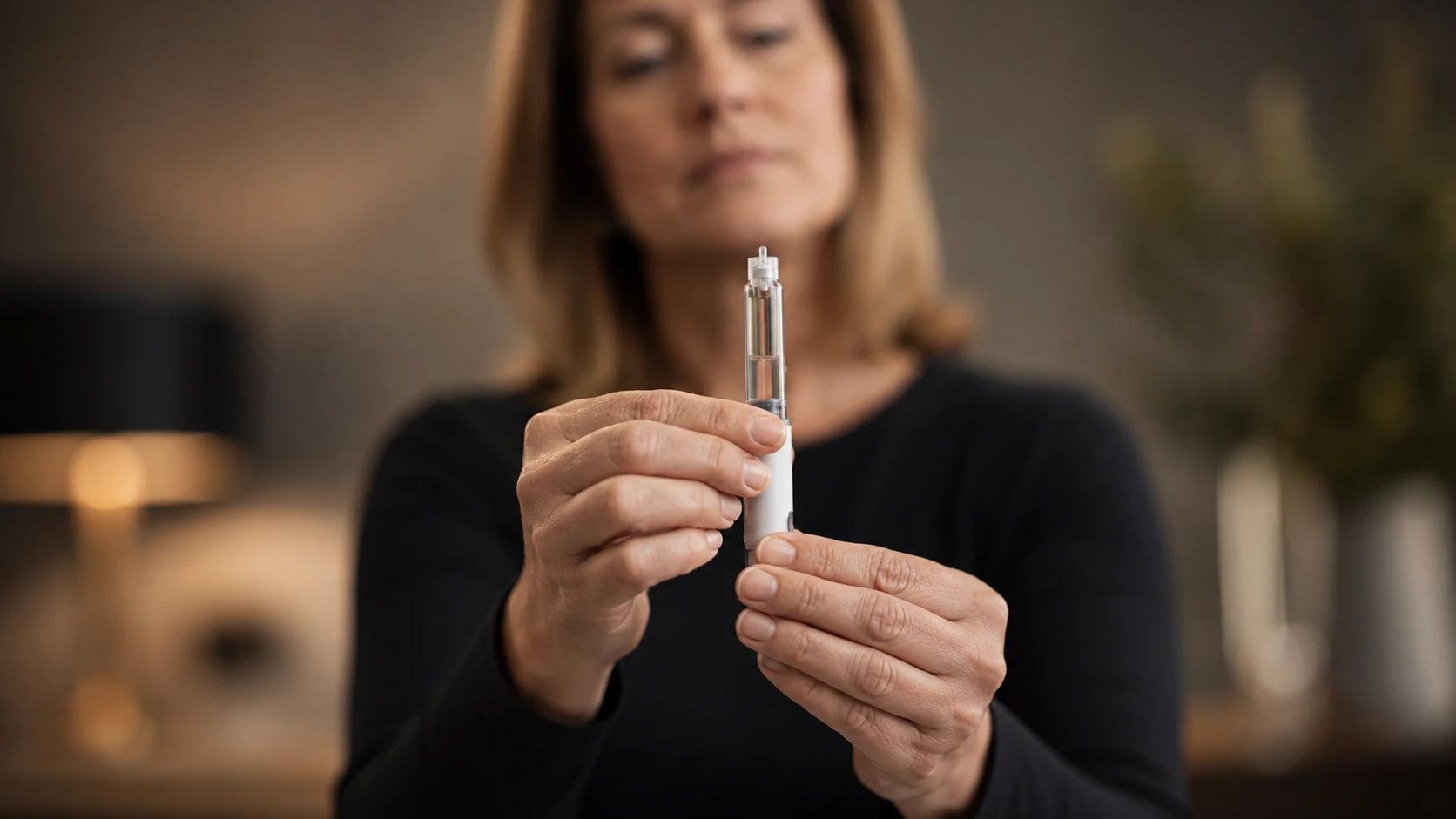
New observational research suggests that adults with knee osteoarthritis who had prescriptions for GLP-1-based medications were less likely to undergo total knee replacement than similar adults without those prescriptions. The finding is clinically interesting, particularly for patients who also have obesity or type 2 diabetes, but it does not prove that semaglutide or tirzepatide prevents knee replacement or treats osteoarthritis.
The study supports a broader point that is already relevant to knee care: metabolic health, body weight, muscle strength, joint mechanics, and the severity of the arthritis all influence symptoms and treatment decisions. A medication may be one part of that plan when there is an appropriate medical indication. It is not a substitute for an accurate diagnosis.
What the Research Found
Researchers used the TriNetX health-record database to compare adults with knee osteoarthritis who had GLP-1 medication prescriptions with matched adults who did not. The analysis included separate groups with approximately one year and three years of recorded exposure. It also examined newer medications, including semaglutide and tirzepatide.
The largest association was seen in the group with three years of semaglutide or tirzepatide exposure. At eight years, the cumulative incidence of total knee replacement was 4.71 percentage points lower in the exposed group. The adjusted hazard ratio was 0.72, corresponding to a 28% lower relative hazard of knee replacement during follow-up.
Those numbers need to be interpreted correctly. This was a retrospective observational analysis, not a randomized clinical trial. It found an association. It did not establish that the medications caused the reduction in knee replacement.
What the Study Cannot Tell Us
The database recorded prescriptions, but it could not confirm that every prescription was filled, that the medication was taken consistently, or why it was prescribed. Some patients may have been treated for type 2 diabetes, some for obesity, and some for both.
The study also did not include longitudinal weight changes, pain and function scores, radiographic progression, physical activity, muscle strength, frailty, or detailed measures of osteoarthritis severity. It could not determine why an individual patient did or did not proceed with surgery. Differences in health status, access to care, willingness to undergo surgery, or other unmeasured factors may have influenced the results.
For those reasons, the study should not be used to tell a patient that a GLP-1 medication will prevent knee replacement. It is a useful signal that deserves further study.
Why Weight Loss May Help Knee Osteoarthritis
The clearest explanation is mechanical. Excess body weight increases the demand placed on the knee during walking, stairs, squatting, and other daily activities. In patients with overweight or obesity, clinically meaningful weight loss can reduce pain and improve function. This is true whether the weight loss results from nutrition, exercise, medication, bariatric surgery, or a combination of approaches.
GLP-1-based medications may also influence inflammation, pain signaling, or joint biology. That possibility is biologically plausible and is being studied, but a direct protective or cartilage-regenerating effect has not been established in routine clinical care. This database study did not measure inflammatory markers or structural changes in the joint and cannot separate the effects of weight loss from metabolic changes, direct drug effects, or residual confounding.
The practical conclusion is straightforward: improving metabolic health and reducing excess body weight may improve knee symptoms and may affect the course of treatment, but GLP-1 medications are not approved as a treatment for osteoarthritis or as a way to prevent knee replacement.
How We Approach Knee Osteoarthritis at Paragon
Knee pain is a symptom, not a diagnosis. Before recommending a procedure or referring a patient for surgical evaluation, we determine what is causing the pain and how advanced the problem is. That begins with the history and physical examination and may include weight-bearing X-rays, diagnostic ultrasound, or MRI when the result is likely to change the plan.
Treatment is matched to the diagnosis. Rehabilitation may improve strength, mobility, movement patterns, and load tolerance. Weight management may be appropriate when excess body weight is contributing to symptoms or when a patient has another established metabolic indication for treatment. Bracing, medication, activity modification, or an injection may also have a role.
For selected patients, we may discuss orthobiologic procedures such as ultrasound-guided PRP for the knee. PRP currently has a broader evidence base for knee osteoarthritis than more invasive options. A2M and SuperShot PRP or bone marrow concentrate (BMAC) require a more individualized discussion because the evidence, cost, invasiveness, and regulatory considerations differ. A newer or more expensive procedure is not automatically a better treatment.
When there is an appropriate medical indication, medically supervised weight loss may include medications such as tirzepatide or semaglutide. These medications should be prescribed based on the patient's metabolic health, medical history, contraindications, tolerability, and treatment goals - not solely to delay knee replacement.
There is no proven formula showing that combining a GLP-1 medication with PRP, BMAC, A2M, or another injection produces a greater result than either treatment alone. When multiple treatments are used, each should have a clear indication and a realistic goal.
Preserving Muscle During Weight Loss
For a patient with knee osteoarthritis, weight loss should not be measured only by the number on the scale. Loss of lean mass can reduce strength and make daily activities more difficult. Quadriceps and hip strength are particularly important for walking, stairs, balance, and tolerance of joint loading.
A responsible medical weight-loss plan should include adequate protein intake, progressive resistance training when appropriate, and attention to body composition. The goal is to reduce excess fat while preserving as much muscle, strength, and function as possible.
Who This Applies To
A GLP-1-based medication may be appropriate for a patient who meets established criteria for obesity treatment or diabetes management after medical screening. Knee pain alone is not an indication to prescribe one of these medications. The decision also requires review of contraindications, other medications, gastrointestinal symptoms, pregnancy plans, and other relevant risks.
Likewise, not every patient with knee osteoarthritis needs an injection, and not every patient should postpone surgery. Advanced joint damage, severe functional limitation, instability, deformity, or mechanical pathology may warrant a surgical opinion. Conservative treatment should expand reasonable choices, not delay an appropriate referral.
Frequently Asked Questions
Does a GLP-1 medication treat arthritis?
No. Semaglutide and tirzepatide are not FDA approved to treat knee osteoarthritis or prevent knee replacement. The study found an association between recorded GLP-1 prescriptions and a lower rate of total knee replacement. It did not prove a direct arthritis treatment effect.
Will losing weight fix my knee pain?
Weight loss can reduce joint loading and often improves pain and function in patients with overweight or obesity. It does not reverse established structural osteoarthritis, correct instability or malalignment, repair a displaced tear, or guarantee that surgery will never be needed.
Can I avoid knee replacement?
Some patients manage knee osteoarthritis for years without replacement, while others eventually benefit from surgery. The answer depends on the diagnosis, severity of joint damage, symptoms, function, health, goals, and response to reasonable nonsurgical care. A medication or injection cannot guarantee that replacement will be avoided.
Is tirzepatide or semaglutide better for knee osteoarthritis?
The study grouped semaglutide and tirzepatide together and was not designed to compare them directly for knee outcomes. Neither should be selected specifically as an arthritis treatment. The choice, if either medication is appropriate, should be based on the metabolic indication, medical history, contraindications, expected benefit, tolerability, cost, and insurance coverage.
Should I start a GLP-1 medication to delay knee replacement?
Not for that reason alone. A GLP-1-based medication should be considered only when there is an established medical indication and after appropriate screening. The current research does not prove that starting one will prevent or delay surgery for an individual patient.
The Bottom Line
This study adds to the evidence that metabolic health and body weight matter in knee osteoarthritis. It suggests that patients with recorded GLP-1 medication use had fewer knee replacements over follow-up, but it does not show that the medication caused that difference or that it should be prescribed as an arthritis treatment.
The first step remains an accurate diagnosis. From there, the plan may include rehabilitation, weight management, medication, an injection, or a surgical opinion. The right approach is the one that matches the knee, the patient's health, and the patient's goals.
If you are dealing with knee arthritis or knee pain in Atlanta, Sandy Springs, Roswell, Marietta, or the surrounding metro area and want to understand your nonsurgical options, book a consultation with Paragon Sports Medicine or call 470-270-8978.
This article is for educational purposes and is not medical advice. Individual results vary. Please consult your provider at Paragon Sports Medicine about what is appropriate for you.
.avif)