Stem Cell Therapy in Atlanta: What It Actually Is
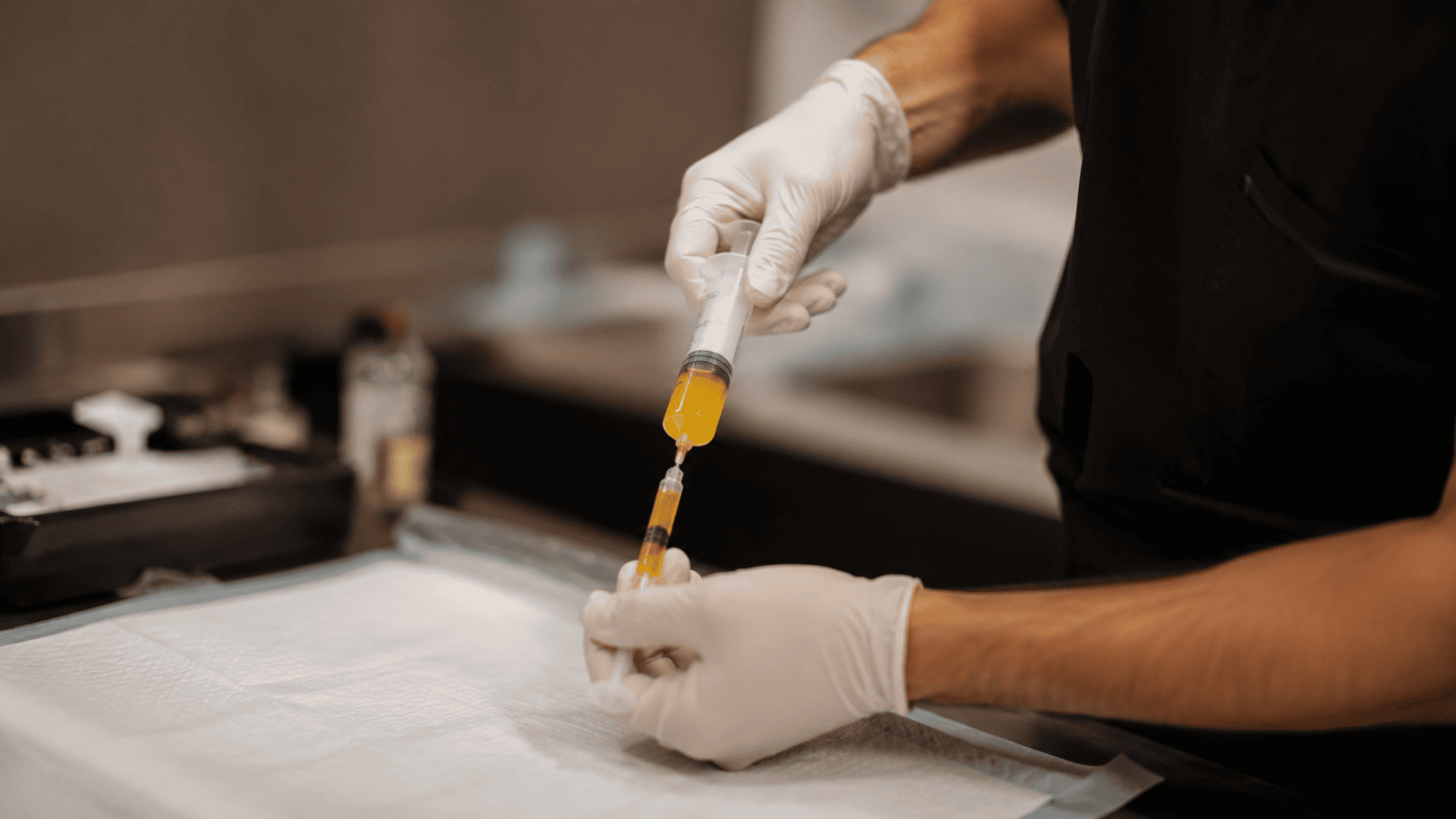
"Stem cell therapy" is the term many patients use when searching for nonsurgical treatment of arthritis or a chronic musculoskeletal injury. However, it is not an accurate description of most procedures performed in orthopedic and sports medicine clinics.
These procedures typically use the patient's own bone marrow or adipose tissue. They are more accurately described as orthobiologic procedures because they contain a combination of cells and naturally occurring signaling components rather than an isolated stem cell product.
Using accurate terminology helps set realistic expectations about what these procedures are, and what they can reasonably be expected to accomplish.
Start With the Regulatory Reality
There are no FDA approved stem cell products for osteoarthritis, tendon injuries, or other routine orthopedic conditions. The FDA has specifically cautioned consumers about regenerative medicine products marketed for orthopedic conditions without FDA approval.
Using a patient's own tissue does not automatically make a treatment FDA approved. The regulatory requirements depend on the type of tissue, how it is obtained and processed, and how it is used. A device used to prepare an orthobiologic product may be FDA cleared, but that clearance should not be represented as FDA approval of the resulting treatment for arthritis or injury.
At Paragon Sports Medicine, we use the more accurate term 'orthobiologic procedures.' We explain what is being used, the current evidence, its limitations, and the regulatory distinctions relevant to the specific procedure. We do not represent these treatments as FDA approved stem cell therapies.
What These Procedures Actually Involve
BMAC is prepared from bone marrow collected from the patient's pelvis. The marrow is processed at the point of care to concentrate its cellular and signaling components before being placed at the treatment site under ultrasound guidance. The result is bone marrow aspirate concentrate, not an isolated or laboratory expanded stem cell product.
Adipose derived procedures use tissue collected from the patient's own fat. That tissue contains a combination of cells, structural components, and naturally occurring signaling factors. Its composition depends on how it is collected and processed, so it is more accurately described as an adipose derived orthobiologic rather than a purified stem cell injection.
PRP is prepared from the patient's blood and concentrates platelets and their associated signaling proteins. Although PRP, BMAC, and adipose derived procedures all fall under the broader orthobiologic category, they differ in how they are obtained, what they contain, how invasive they are, and the evidence supporting their use.
You can read more about our approach to BMAC in Atlanta and adipose derived procedures.
What the Evidence Supports
Research on BMAC and adipose derived orthobiologics is promising but still developing. Studies involving knee osteoarthritis have reported improvements in pain and function, although results vary. Differences in patient selection, preparation methods, comparison treatments, and follow up make it difficult to apply every study to every patient.
These procedures should not be presented as a way to regrow a normal joint or reverse advanced arthritis. MRI changes may be interesting, but they do not necessarily represent meaningful cartilage regeneration or predict how a patient will function.
The realistic goal is to reduce pain and improve function in an appropriately selected patient. Results are less predictable in advanced arthritis or when symptoms stem from instability, malalignment, a displaced tear, or another mechanical problem that an injection cannot correct.
For knee osteoarthritis, PRP currently has a stronger evidence base than BMAC or adipose derived procedures. The more complex or expensive procedure is not necessarily the better option.
Why We Choose One Approach Over Another, or None
PRP, BMAC, and adipose derived procedures are distinct treatment options, not steps in a required sequence. Persistent symptoms after one treatment do not necessarily mean that a more invasive orthobiologic procedure is the next step.
The recommendation starts with the diagnosis. We consider the examination, relevant ultrasound or MRI findings, severity of the condition, biomechanics, previous treatment, medical history, functional goals, and available alternatives. We then decide whether the expected benefit justifies the additional cost and invasiveness.
PRP may be the most appropriate option for some patients. BMAC or an adipose derived procedure may be reasonable for selected patients after an honest discussion of the evidence and its limitations. In many cases, rehabilitation, load management, another type of injection, or a surgical consultation is the better recommendation.
We do not recommend an orthobiologic procedure simply because a patient requests it. If it does not align with the diagnosis, we will explain why and recommend a more appropriate option.
Risks, Honestly
Because these procedures use the patient's own tissue, they do not carry the same risk of immune rejection as donor derived products. However, that does not make them risk free.
Potential risks include pain, bleeding, bruising, infection, injury to nearby structures, and continued or worsening symptoms. BMAC and adipose derived procedures also require tissue collection, which can cause soreness and introduce additional procedural risks. Long term safety data remain limited, and techniques are not standardized across practices.
The most important limitation is that treatment may not provide meaningful improvement. Patients should understand the potential risks, expected recovery, available alternatives, and possibility of no benefit before choosing an invasive, self pay procedure.
Rehabilitation and Follow Up
An orthobiologic procedure is only one part of treatment. It does not correct weakness, limited mobility, poor load tolerance, training errors, instability, or a mechanical problem that requires a different intervention.
Rehabilitation is based on the diagnosis and the tissue being treated. Activity is initially modified to manage post procedure soreness, followed by progressive strengthening and a structured return to activity. Follow up allows us to measure the response, adjust rehabilitation as needed, and change direction when the expected improvement is not occurring.
Improvement typically develops over weeks to months rather than immediately. Because recovery varies, we track progress using specific functional goals, not pain scores or imaging findings alone.
What to Expect at Your Visit
The first appointment is a diagnostic evaluation, not a procedure visit. We review the patient's history, prior treatment, medical conditions, medications, imaging, and the activities the patient hopes to resume. The examination determines whether the painful structure has been correctly identified and whether a biologic procedure could reasonably address the problem. Musculoskeletal ultrasound is used when it provides useful diagnostic information.
If BMAC or an adipose derived procedure is appropriate, we explain the collection method, the preparation used, the intended placement site, alternatives, expected recovery, cost, evidence, and known limitations. The procedure is typically performed in the office using sterile technique and ultrasound guidance to ensure accurate placement at the intended target. Patients go home the same day with diagnosis specific aftercare instructions and follow up.
Frequently asked questions
Is stem cell therapy FDA approved?
No stem cell product is FDA approved to treat osteoarthritis, tendon injuries, or other routine orthopedic conditions. Some devices used to prepare orthobiologic products are FDA cleared, but device clearance is not the same as approval of the resulting treatment. Regulatory requirements for an autologous tissue procedure depend on the tissue used, how it is processed, and its intended use.
What is the difference between stem cell therapy and BMAC?
BMAC stands for bone marrow aspirate concentrate. It is prepared from the patient's own bone marrow and contains a mixture of cellular and signaling components. It is not an isolated or laboratory expanded stem cell product. Although BMAC is often marketed as 'stem cell therapy,' an orthobiologic procedure is a more accurate description.
Do orthobiologic procedures work?
Some studies have reported improvements in pain and function, particularly among selected patients with knee osteoarthritis. However, results are variable, and some studies have not shown a meaningful advantage over comparison treatments. These procedures should not be expected to regenerate a normal joint or cure arthritis, and not every patient improves.
Is BMAC the same as PRP?
No. PRP is prepared from blood and concentrates platelets and associated signaling proteins. BMAC is prepared from bone marrow, whereas adipose derived procedures use tissue collected from fat. These treatments differ in composition, collection method, invasiveness, cost, and supporting evidence. Of the three, PRP currently has the strongest evidence for treating knee osteoarthritis.
Are these procedures safe?
Using the patient's own tissue avoids the immune rejection concerns associated with donor products, but risks remain. These include pain, bleeding, infection, injury to nearby structures, collection site soreness, and lack of improvement. Medical conditions and medications that may increase procedural risk should be reviewed before treatment.
How long does it take to see results?
These procedures do not provide immediate pain relief. Improvement, when it occurs, typically develops over several weeks and may continue over a few months. The timeline depends on the diagnosis, severity of the condition, procedure performed, and rehabilitation. Results cannot be guaranteed.
Ready to Find Out Whether This Fits You
The first step is to determine whether an orthobiologic procedure is appropriate for your diagnosis. We will evaluate your condition, explain the available options, and provide a clear recommendation, including when rehabilitation, another treatment, or a surgical consultation would be more appropriate.
To discuss BMAC, adipose derived procedures, PRP, or other treatment options in Atlanta, book a consultation with Paragon Sports Medicine or call 470 270 8978.
This article is for educational purposes and is not medical advice. Individual results vary. Please consult your provider at Paragon Sports Medicine about what is appropriate for you.
.avif)